Sunday, April 20, 2014

It's Patriot's Day -- Lexington and Concord

Battle Green Lexington

James and Elin at war


Concord North Bridge

First, wild turkeys on the way right across from Walden Pond.
This is where they wanted to build all the houses until Don Henley
led the Save Walden Pond effort.  No doubt the pond was saved.


Grave of British Soldiers very near where they were killed

The Old North Bridge over the Concord River where
the Minutemen stopped the British in their tracks.
Also where James angers Elin by shooting at her.

Minuteman James


Tuesday, March 11, 2014

Brandy Station Battlefield -- A Personal Tour, June 2013

First a map so we have our bearings


This is what a typical stop to hear the history looked like
The tour was led by three historians that are expert on the battle:
 Clark "Bud" Hall, Mike Block, and Eric Wittenberg 

In this photo, we are looking towards Beverly's Ford where 
Buford's Union cavalry crossed the Rappahannock. 

The photo below shows the view towards the 
Cunningham Farm.  This area was once owned by someone 
from California who wanted to build a Grand Prix racetrack 
there.  His lawyer was not as good a the Civil War Trusts' lawyer.

The first tree line in the background is the Hazel River.
Further in the distance, the tree line is the Rappahannock River.
The Hazel flows into the Rappahannock to the right.

Looks like J.E.B. Stuart showed up in person!

My son James checking out one of the
horses for the cavalry demonstration.

James' photo actually made the Fredericksburg
Newspaper article on this tour here.  After noting
that the boy in the photo was my son James, they
actually updated the photo with James' name!

The treeline is the first stonewall where
Rooney Lee's Confederate cavalry fought
before falling back to Fleetwood Hill.

More cavalry demonstration


These photos are looking towards the direction Gregg's
and Kilpatrick's cavalry over Fleetwood Hill towards
Jeb Stuart's Headquarters.  The "MacMansion" in
the second photo and it's land will be sold to the trust.
The house will be torn down as it does not belong on a battlefield.


The view from the front porch of the Rose Hill House

The house was General Judson Kilpatrick's headquarters
during the battle.  In the first photo below, Kilpatrick is 
standing with his left foot on the bottom step of the porch.
In the next photo, James does his Kilpatrick imitation.

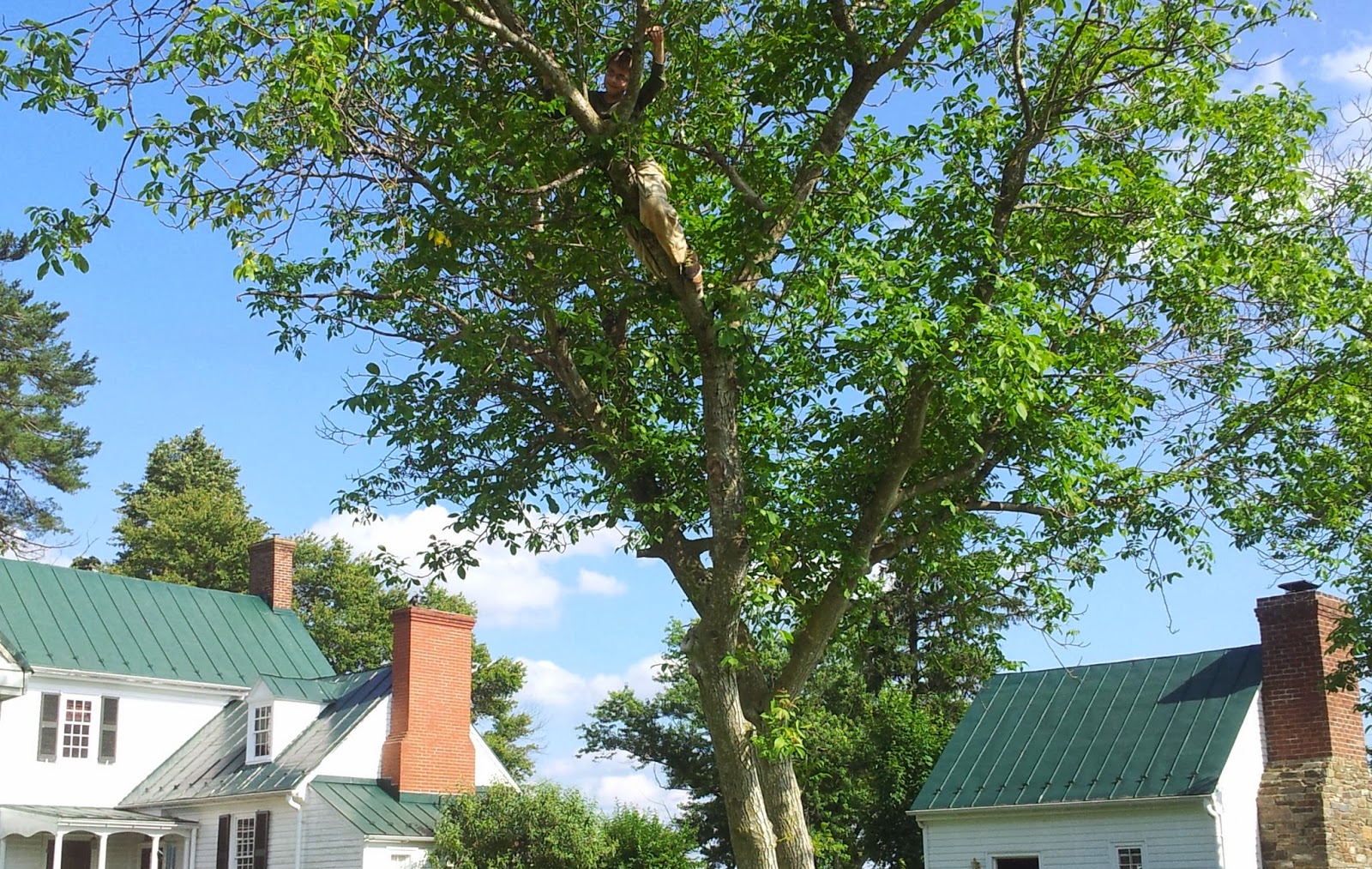
James climbing the tree at the back of Rose Hill. A
lawsuit waiting to happen.  I had to help him down. I
believe the older gentleman is one of the three 
generations of Stuarts that participated in the tour.


The view from the back of Rose Hill.  The mountain
on the right is Cedar Mountain where Stonewall Jackson
fought on his way to the Second Battle of Manassas. 

My videos of the cavalry demonstration:


Thursday, February 21, 2013

Fort Ticonderoga, New York

Fort Ticonderoga, formerly Fort Carillon, is a large 18th-century star fort built by the Canadians and the French at a narrows near the south end of Lake Champlain in upstate New York in the United States. It was constructed by Canadien Michel Chartier de Lotbinière, Marquis de Lotbinière between 1754 and 1757 during the Seven Years' War, often referred to as the French and Indian War in the USA. It was of strategic importance during the 18th-century colonial conflicts between Great Britain and France, and again played a role during the American Revolutionary War.


In June 1758, British General James Abercromby began amassing a large force at Fort William Henry in preparation for the military campaign directed up the Champlain Valley. These forces landed at the north end of Lake George, only four miles from the fort, on July 6. The French general Louis-Joseph de Montcalm, who had only arrived at Carillon in late June, engaged his troops in a flurry of work to improve the fort's outer defenses. The French built, over two days, entrenchments around a rise between the fort and Mount Hope, about three-quarters of a mile (one kilometer) northwest of the fort, and then constructed an abatis (felled trees with sharpened branches pointing out, see photo above) below these entrenchments.

On July 8, 1758, Abercromby ordered a frontal attack against the hastily assembled French works. Abercromby tried to move rapidly against the few French defenders, opting to forgo field cannon and relying instead on the numerical superiority of his 16,000 troops. In the Battle of Carillon, the British were soundly defeated by the 4,000 French defenders. The battle took place far enough away from the fort that its guns were rarely used. 


The memorial below is dedicated to the failed attack on July 8, 1758

Sunday, February 17, 2013

Leesburg Airshow 2012

The Leesburg Airshow at the Leesburg Executive Airport on a rainy day

 The airport has an interesting history:
Radio and television personality Arthur Godfrey, who owned property near Leesburg, was an avid pilot. He bought George’s Field in 1952 and popularized it on his radio show as “The Old Cow Pasture.” As the Town grew, having an airport in what was beginning to be the center of Town became a problem, especially as Godfrey upgraded to larger and more powerful airplanes to support his weekly commute to New York City. In 1960, Godfrey deeded 100 acres of his property to the Town as part of a plan for the Town to sell the property and use the proceeds of the sale to match state and federal funding for the construction of a new airport south of town.  Godfrey Field was dedicated in 1964 by Mayor Frank Raflo with Arthur Godfrey in attendance. 

Can anyone identify the US Navy plane behind James?


One of the original American Airlines Flagship DC3s

James and myself with the DC3

T-6 Texan "Pamela Marie"

Not sure what this one is either, Soviet?


Saturday, February 16, 2013

Harpers Ferry, West Virginia

Harpers Ferry, West Virginia is considered by many to be the most historic city in the country

CSX trains still use this line, that's James on the right

Two views of the Baltimore and Ohio train tunnel coming through the Maryland Heights

You can no longer sit on it as it was being worn out by too many bottoms


Thursday, February 14, 2013

A Trip to the Railroad Museum of Pennsylvania

Pennsylvania played a major role in American railroad history.
in Amish country near Lancaster, PA.  For you movie buffs, it is
also where the movie Witness was filmed with Harrison Ford.  
This is some of the railroad history James and I saw there.


Pennsylvania Railroad D16sb No. 1223 4-4-0 1905

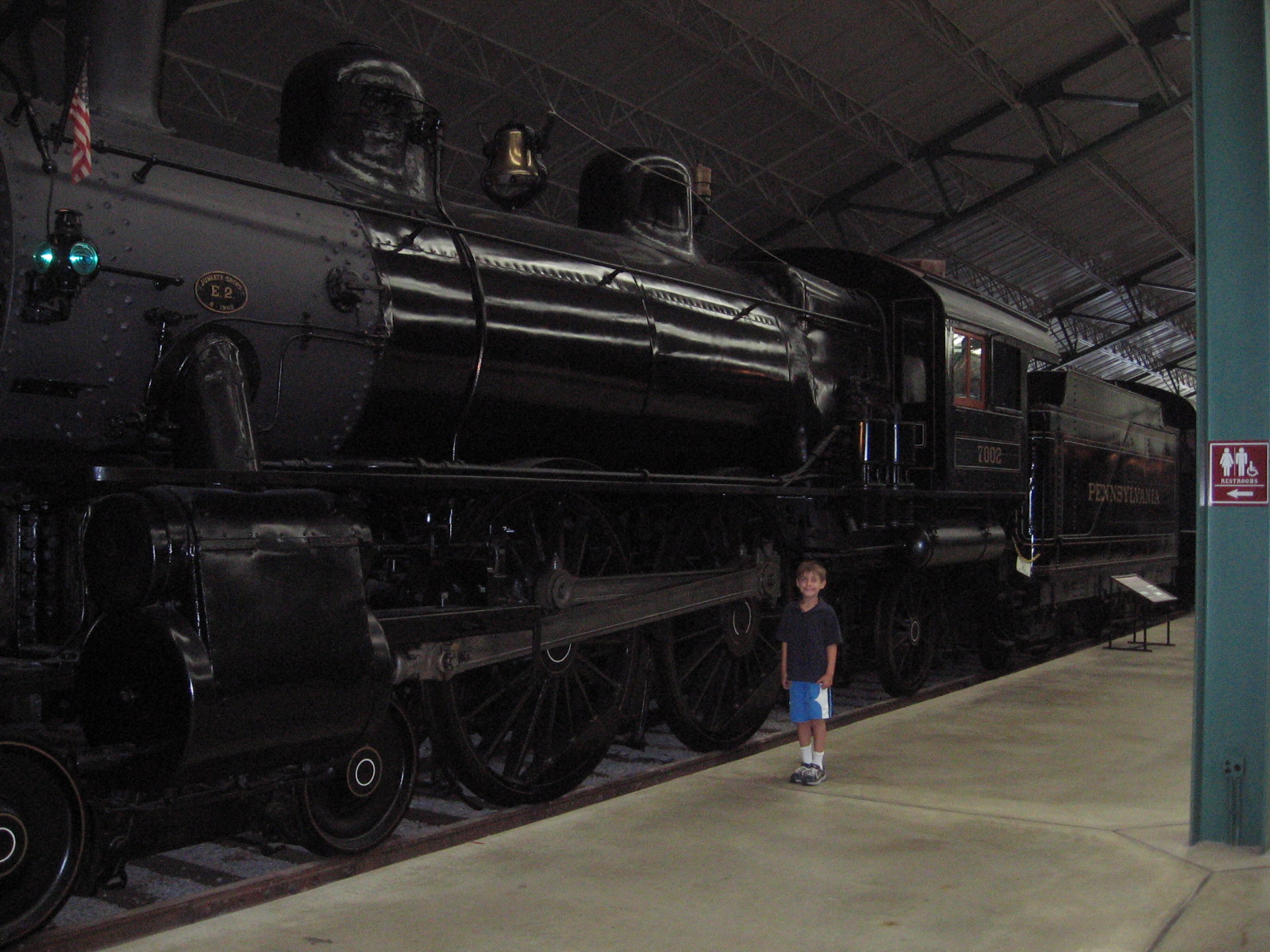
Pennsylvania Railroad E7s No. 7002 4-4-0 1902

Pennsylvania Railroad G5s No. 5751 4-6-0 1924

New York, Chicago & St. Louis S-2 No. 757 2-8-4 1944


Pennsylvania Railroad E6s No. 460 4-4-2  1914
Pennsylvania Railroad H10s No. 7688 2-8-0 1915

Pennsylvania Railroad E6s No. 460 4-4-2 1914

Pennsylvania Power & Light Fireless No. 4094 0-8-0F 1940


Coudersport & Port Allegany Size 2 type Snow Plow  1890c.

Pennsylvania Railroad Ep20/E7 No. 5901 1945


Reading 903 1950

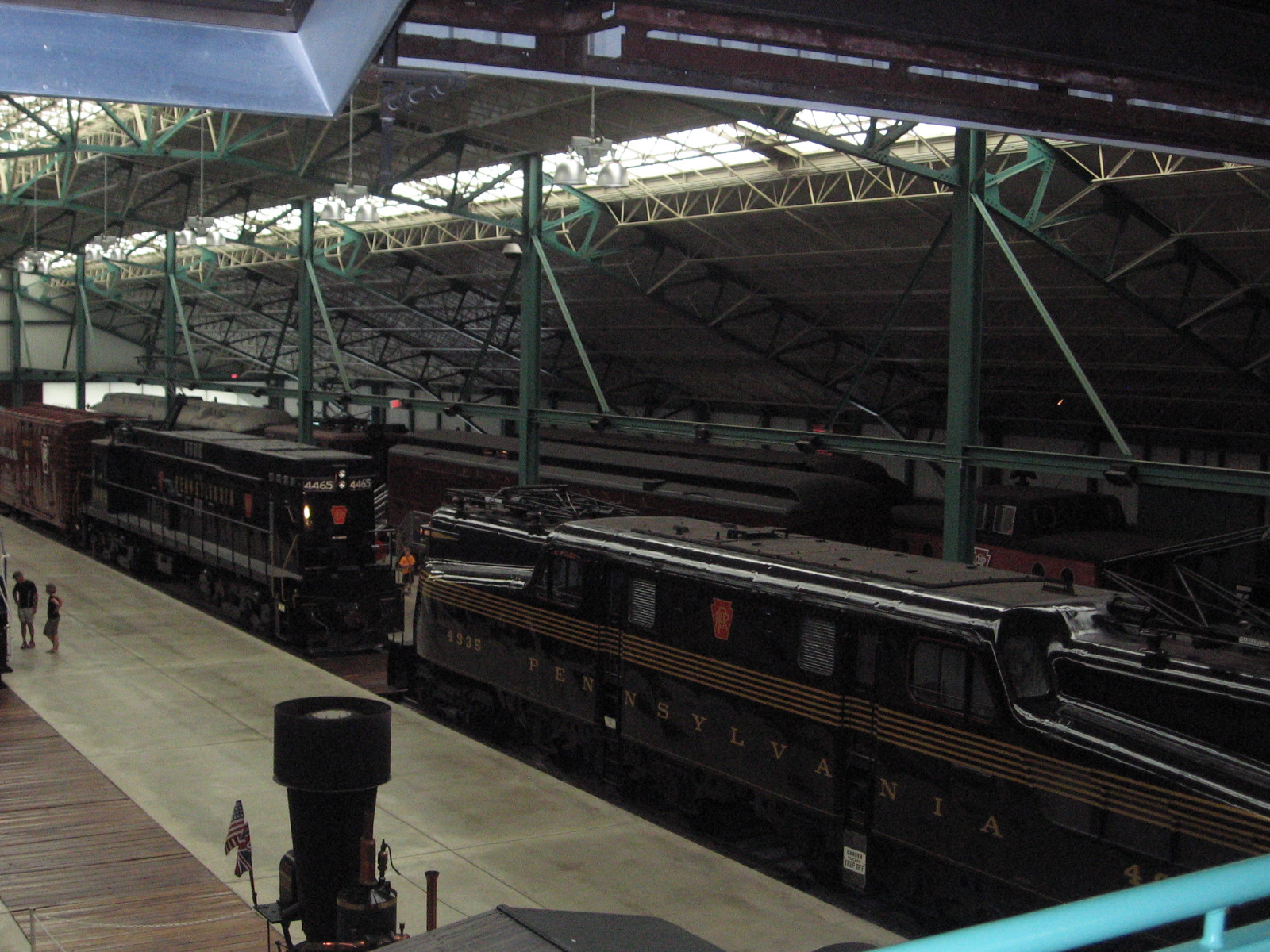
Pennsylvania Railroad No. 4935 1943


James at the turntable

An early refrigerated car!

Some overviews of the museum